


Download
Download the pack

Child Safeguarding Statement
Some resources and activities may prompt a child to remember and potentially share an experience of harm. Make sure you’re familiar with your school's safeguarding policies and procedures so you can confidently report safety and well-being concerns.
Prepare students for the session by discussing: their right to be safe and respected; what to do if discussing online safety makes them feel uncomfortable or unsafe; and how to seek help if they feel or have felt unsafe. Use this resource available on the website.
Tips & Resources
Practical Guidance for Digital Wellbeing and Safety
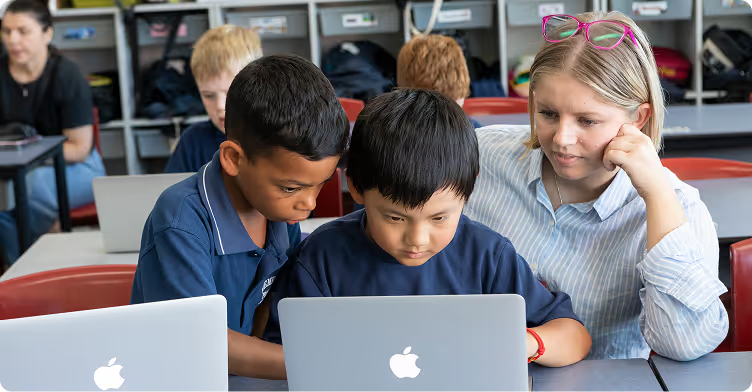
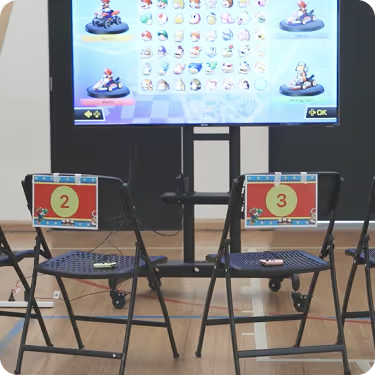
Esports in action: How Silverton Primary School built a safe and inclusive gaming program
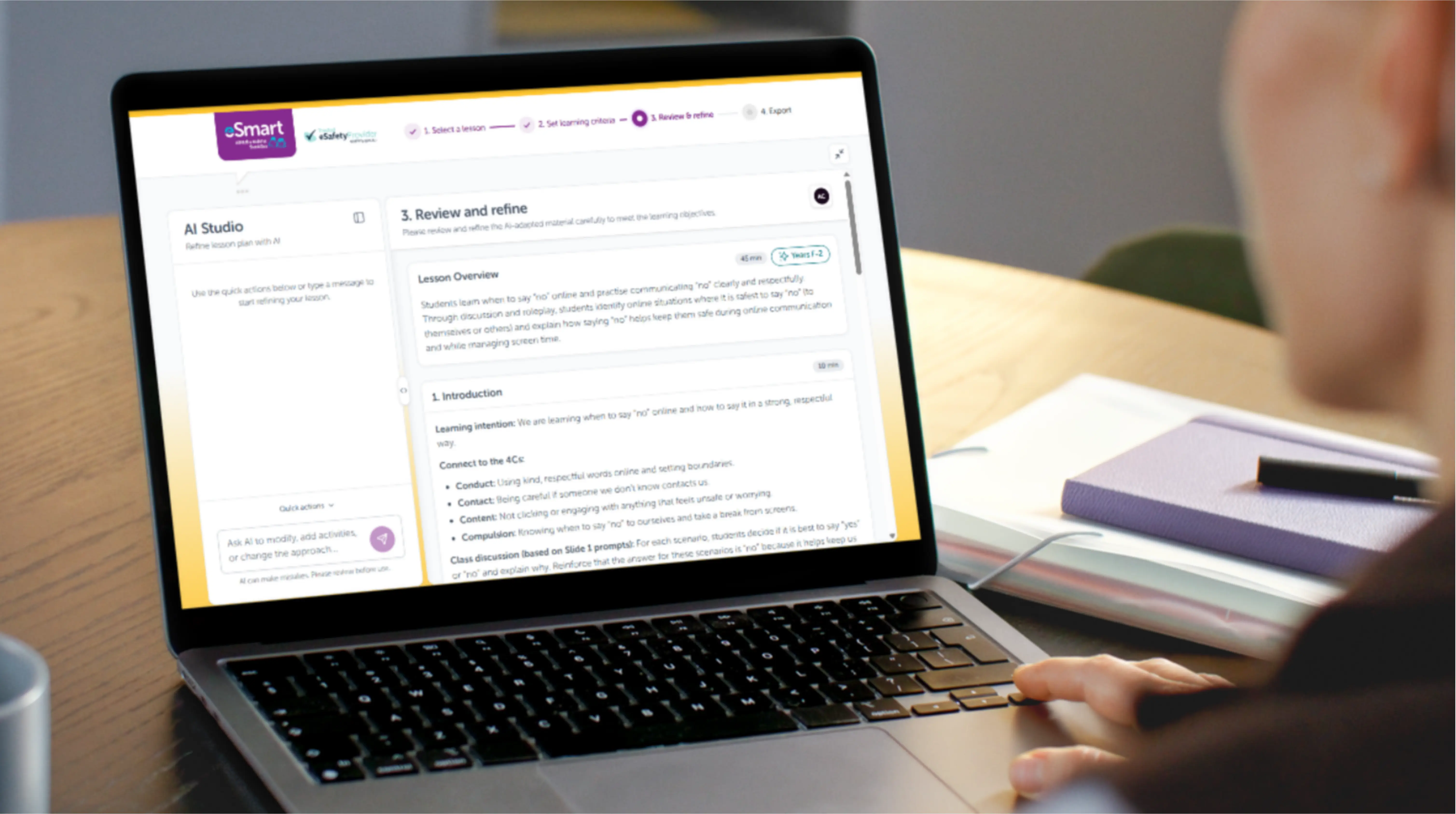
Help shape our next-generation AI-assisted lesson differentiation tool
Supporting safe gaming habits: a guide for primary educators
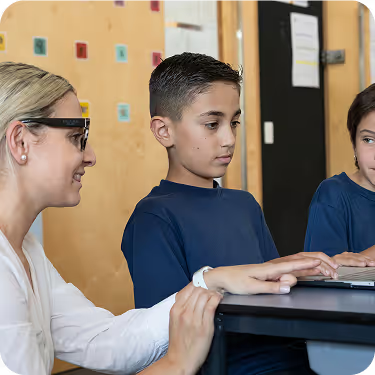
Teaching media literacy and online content in primary school

Teaching children safe communication in the digital world
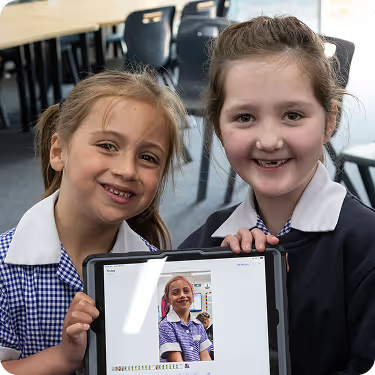
Cyberbullying and respectful online behaviour in primary schools
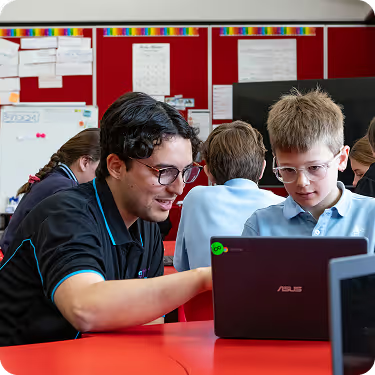
Helping students build healthy digital habits in primary school
Digital Licence+ to Digital Licence: a guide for Years 5 and 6 educators
Transitioning from Digital Licence+ and Media Literacy Lab to new programs

A parent's guide to helping your child think critically online
A parent's guide to helping your child stay safe in online interactions
A parent's guide to helping your child behave respectfully online
A parent's guide to helping your child build healthy digital habits
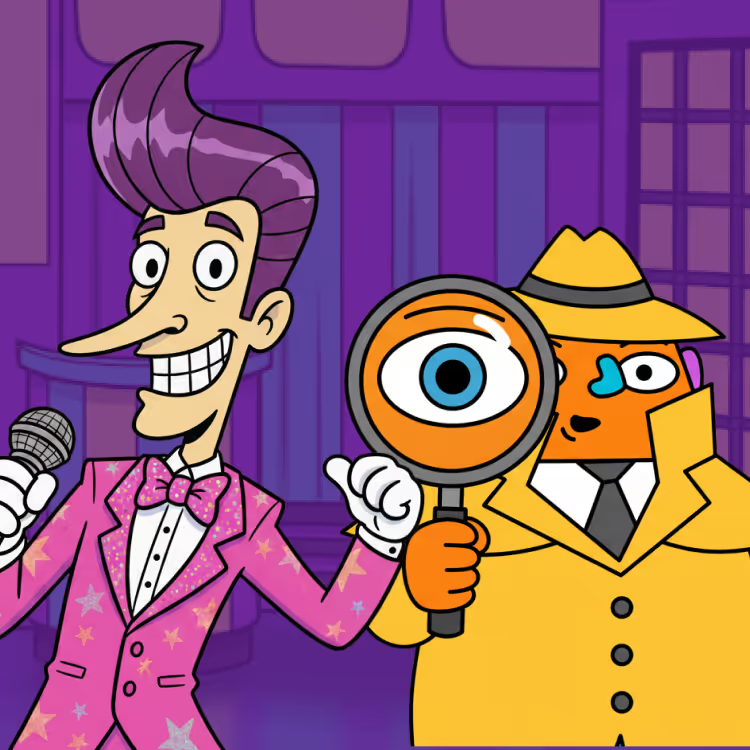
Teach data privacy and media literacy with two new eSmart interactive games