

Download
Download the pack

Child Safeguarding Statement
Some resources and activities may prompt a child to remember and potentially share an experience of harm. Make sure you’re familiar with your school's safeguarding policies and procedures so you can confidently report safety and well-being concerns.
Prepare students for the session by discussing: their right to be safe and respected; what to do if discussing online safety makes them feel uncomfortable or unsafe; and how to seek help if they feel or have felt unsafe. Use this resource available on the website.
Tips & Resources
Esports in Action: How Silverton Primary School Built a Safe and Inclusive Gaming Program
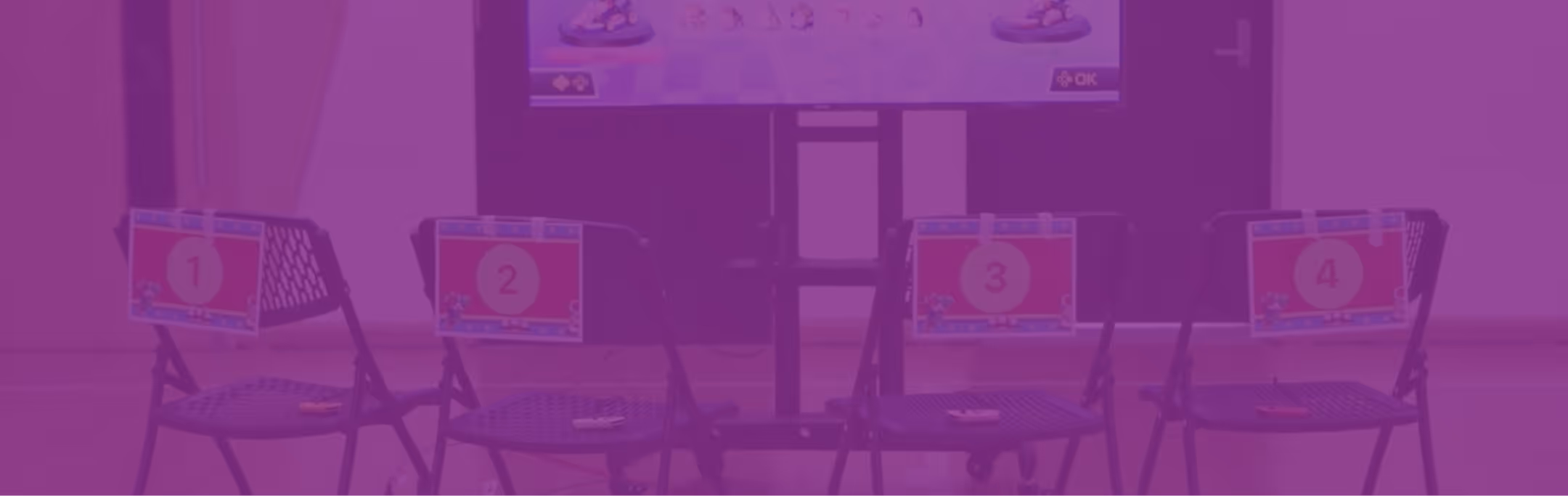
What if gaming could be a force for good at your school?
Every school has students who are passionate about gaming. They talk about it at lunch, light up when it comes up in class and spend hours developing skills most adults don't fully see. That passion is already in your school. The question is whether it has a place there.
Structured esports programs give that passion somewhere to go. Students who haven't connected with traditional extracurriculars find their place. Digital citizenship stops feeling like a lesson and starts feeling like common sense.
Silverton Primary School in Noble Park North, Victoria, has been running an esports program since 2020. Over five years it has become one of the most valued parts of their school culture. Here's what they've learned.
Key takeaways
Esports programs reach students that other programs often miss. Gaming can provide a real pathway to belonging for students disengaged from traditional school activities.
Online safety works best when it's embedded, not separate. Silverton weaves safety into every session rather than treating it as a standalone topic.
You don't need to start big. A lunchtime gaming session with clear ground rules is a perfectly good first step.
Parent buy-in is easier than you'd expect when you lead with the educational purpose.
About Silverton Primary School
Silverton is a government primary school in Melbourne's south-east with around 520 students and a diverse community. They've been a registered eSmart school since 2012.
Their esports program launched during lockdown in 2020 with a simple premise: use gaming as a vehicle for teaching digital safety and wellbeing. The program runs weekly, is capped at 24 students, and each session has a rotating focus around topics such as teamwork, sportsmanship, game strategy, or safe online interaction. Students also complete eSmart Digital Licence modules as part of the program.
As program coordinator Jason Tang puts it: "I believe there are very similar emotional and social benefits to esports that are in traditional physical sports. Every sport has a different skillset that makes or breaks a good athlete, and I think that applies to digital games as well."
Watch Silverton's esports program in action: Silverton Primary School – eSmart Video
Why the program works
The program was designed to help students become safer gamers. The outcomes have gone well beyond that.
It reaches students that other programs don't
As one Silverton educator describes: "Sometimes we have students that don't have the thing that they love that is valued. This platform allows them to really show that skill. And by having a program, it shows that we value it as well."
For students who don't connect with traditional sports or extracurriculars, the esports program has become a genuine point of belonging.
It builds social skills through play
Students from different friendship groups, year levels and backgrounds come together over a shared interest. The program turns that into growth. It supports teamwork under pressure and learning to be respectful toward opponents they can't see.
As the school describes it: "They have created a safe, supportive, and inclusive culture on their own within the program."
Safety is built in, not bolted on
Conversations about privacy, boundaries and respectful behaviour aren't separate "safety lessons." They're part of what it means to be a good player. The program addresses toxic player culture by combining online competition with face-to-face events, so students learn that there's a real person on the other end of every game. Physical wellbeing is woven in to encourage responsible gamers who know when to take a break, stay hydrated and look after themselves.
The program is growing
The program is capped at 24 due to staffing, but demand increases every year. Students have started hosting their own lunchtime tournaments and class-based gaming projects. Silverton was shortlisted as a finalist at the inaugural FUSE Cup Australian School Esports Awards in 2025, with their Mario Kart team winning the primary school national division, and their Just Dance team taking out both the national teen and national solo divisions.
Let students lead on the games. What they need from you is a trusted adult who sets clear expectations and is someone they feel comfortable coming to if something goes wrong.
Taking it beyond the school
Since 2022, Silverton has hosted annual interschool tournaments. In September 2025, five schools and 32 students came together for their latest event, with the eSmart team from the Alannah & Madeline Foundation delivering a digital wellbeing workshop on the day.
These events give students the chance to form friendships across schools, practise sportsmanship with unfamiliar opponents, and regulate their emotions in a competitive setting. Teachers who attend are often inspired to explore esports at their own schools.
How esports fits the curriculum
One of the most common questions educators ask is: "Is this an extracurricular, or does it actually fit into the curriculum?". The answer is both.
Extracurricular model: Silverton Primary School
Silverton runs esports as a weekly club with clear educational intent. Each session has a learning focus, and the program connects naturally to several curriculum areas:
- Health and PE — nutrition, sleep and emotional regulation
- Personal and Social Capability — teamwork and managing emotions
- Ethical Understanding — respect and sportsmanship
- ICT Capability and Digital Technologies — safe use of technology
You don't need a formal curriculum document to make these connections. If you're running a gaming club, you're probably already touching on these areas. Naming them gives you the language to explain the program's value to leadership and parents.
Subject-level model: Launceston College
This is a secondary-level example, but the principles translate directly to primary. The learning is the same, just at a different depth.
Launceston College in Tasmania offers esports as a credited subject under the HPE framework, worth 15 TCE points, structured across four units:
- Recreation Concepts — communication, teamwork and how gaming connects communities
- Active and Healthy Lifestyles — fitness, nutrition and ergonomics
- Individual and Team Games — strategies, tactics, coaching and competing in tournaments
- Personal Development — digital citizenship, goal setting, safety and reflection
The curriculum connections are already there. Esports just makes them relevant to students who might not otherwise engage.

The eSmart Digital Licence
Content lessons engaging with age-appropriate material online
Contact lessons privacy, boundaries and responding to unwanted contact
Conduct lessons respectful behaviour and its impact on others
Compulsion lessons screen time and self-regulation
Talking to parents about esports
When Silverton first pitched the program, parent buy-in wasn't automatic. What made the difference was framing it around digital safety and wellbeing rather than gaming itself. As Tang describes: "Once we pitched the idea of it being linked to digital safety, wellbeing and emotional regulation, knowing when to take breaks, stretch, eat well, that's when parents accepted to give it a go."
If your school is considering something similar: lead with the learning, not the gaming. Show parents the safety measures in place. Celebrate student achievements publicly. Silverton shares esports updates through their school website and morning assemblies.
Connect it to recognised programs like our eSmart Digital Licence, which gives parents confidence that online safety education is structured and evidence-based.
For more practical advice on navigating gaming conversations with parents, see our companion piece:
Online Gaming and Safety: What Primary Teachers Need to Know.
Where to from here
Run a trial lunchtime session. Pick a game with good safety controls, set some ground rules, and see what happens. You'll learn more from one session than from months of planning.
Use the eSmart Digital Licence as a foundation. The Digital Licence program gives students a baseline in digital citizenship before they step into any competitive or social gaming environment. It's free, curriculum-aligned and designed for ages 4 to 12.
Reach out to schools already doing it. Silverton has extended an open invitation to interested educators to visit their program. You can also contact the FUSE Cup to learn about school esports tournaments across Australia.
Resources referenced in this article
- eSmart Lesson Plans — Browse the full library, filterable by risk area and year level.
- eSmart Digital Licence — A free, curriculum-aligned program for building digital citizenship skills in learners aged 4–12. Supported by the Australian Government.
- eSafety Commissioner — Classroom Resources — Curriculum-aligned activities on online safety topics including gaming, cyberbullying, privacy and respectful relationships.
- The eSafety Guide — Look up specific apps, games and platforms to check their safety features and settings.
- FUSE Cup — An esports organisation hosting tournaments for school-aged students across Australia.
- Silverton Primary School — eSmart Video — Watch Silverton's esports program in action.