

Download Lesson Pack
Hooked by design

Child Safeguarding Statement
Some resources and activities may prompt a child to remember and potentially share an experience of harm. Make sure you’re familiar with your school's safeguarding policies and procedures so you can confidently report safety and well-being concerns.
Prepare students for the session by discussing: their right to be safe and respected; what to do if discussing online safety makes them feel uncomfortable or unsafe; and how to seek help if they feel or have felt unsafe. Use this resource available on the website.

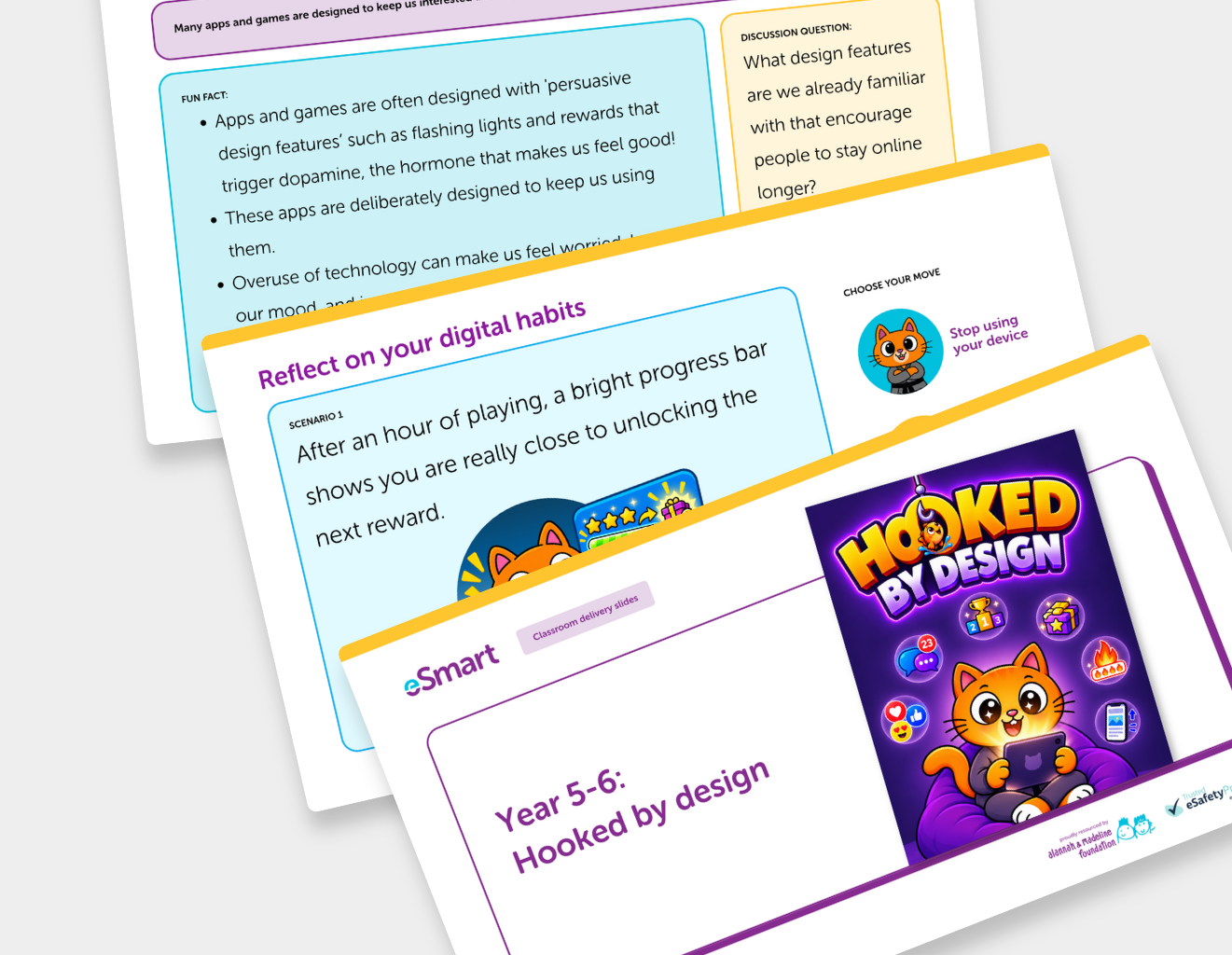
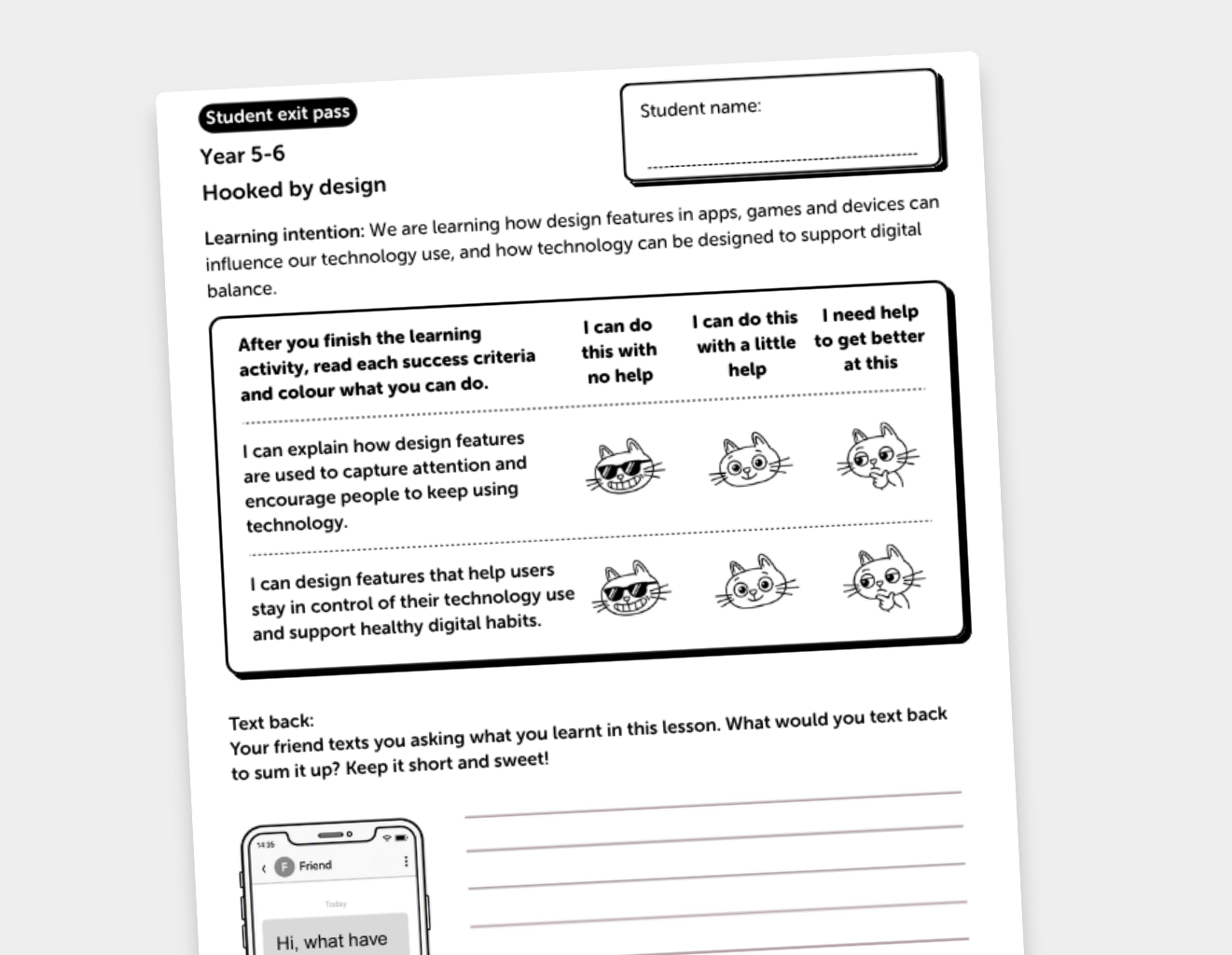
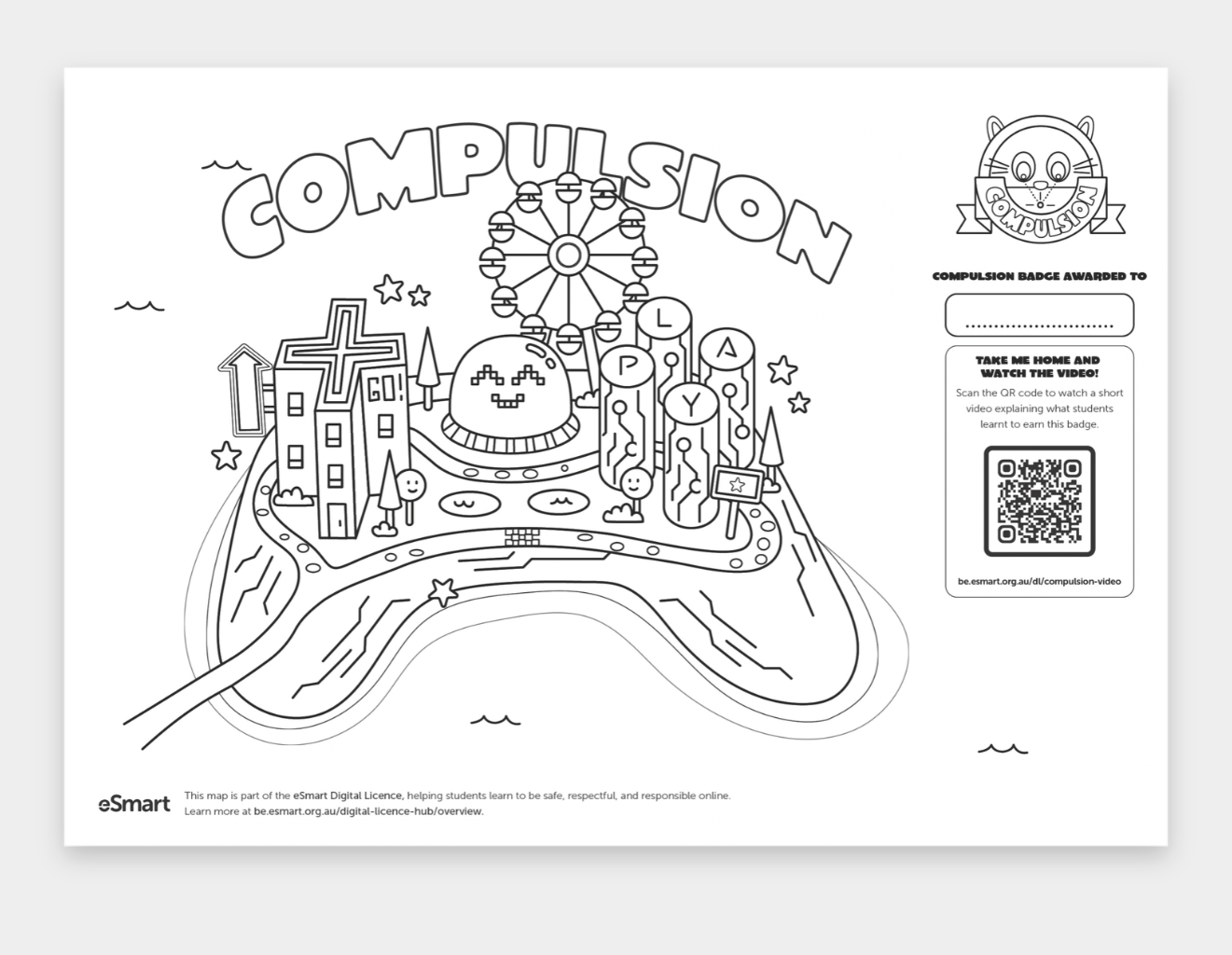

Hooked by design
Students explore how technology design influences their habits, investigate persuasive features, and design healthier technology experiences that support user control.
Lesson details
Compulsion
About this Risk Area
Addresses excessive use of digital devices or online activities which can impact children's mental health, academic performance, and social relationships.
Example topics:
- Understanding the importance of balanced screen time.
- Developing healthy habits for managing digital device use and prioritising offline activities.
- Setting boundaries and practicing self-regulation when it comes to online gaming, social media, and other digital activities.
The resources for this risk area promote healthy relationships with technology and encourage positive social and emotional wellbeing.
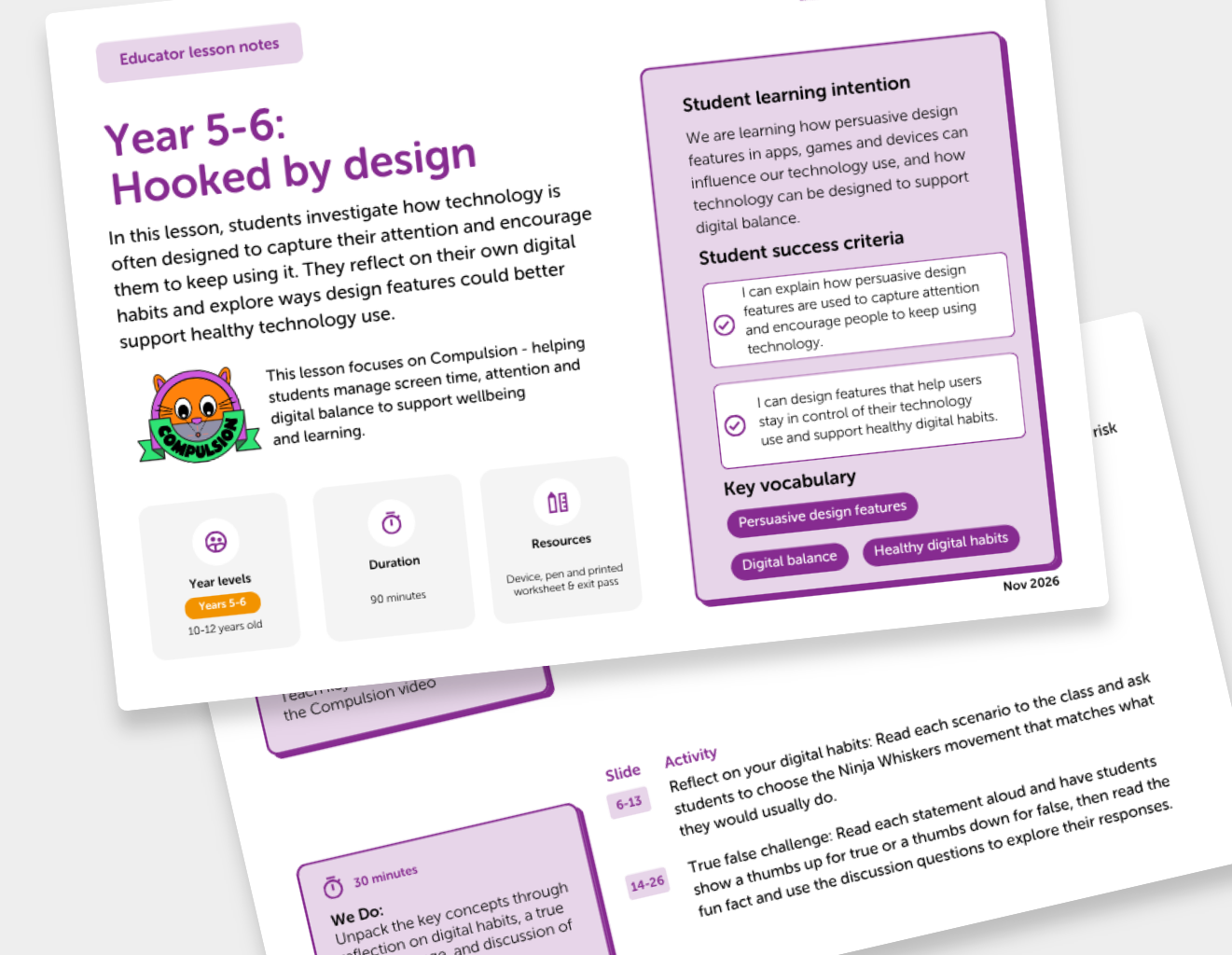
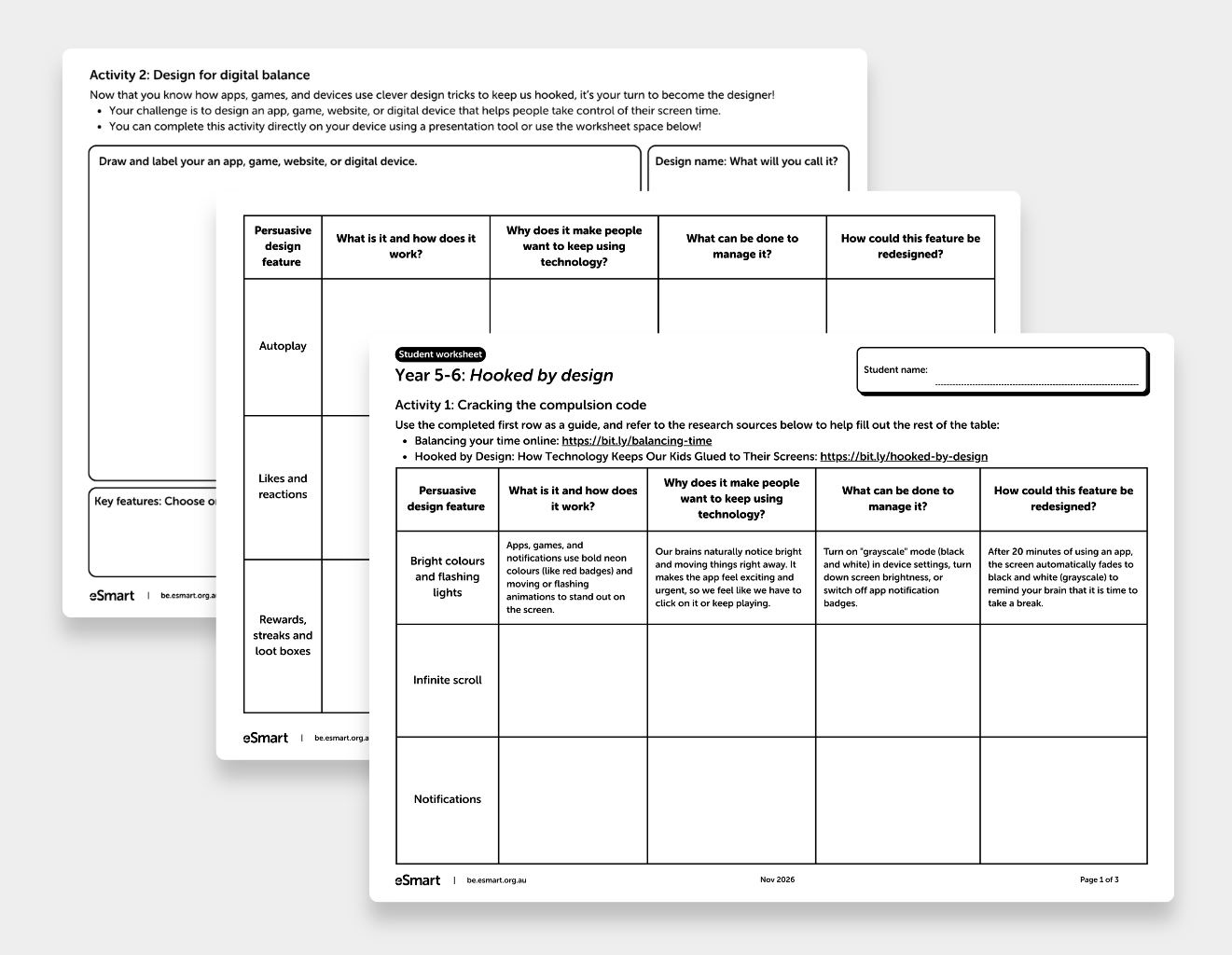
In this lesson, students explore how technology design features can capture attention and influence how they use devices and apps. Students reflect on their own digital habits and consider how features such as notifications, rewards and streaks can encourage continued use. Through a true or false quiz and research activity, they investigate persuasive design features and consider why they are used. Students then apply their learning by designing their own device or app with features that help users take greater control of their time and technology use. The lesson encourages students to think critically about how technology is designed and how thoughtful design choices can support healthier digital habits.
Learning Intentions
We are learning how persuasive design features in apps, games and devices can influence our technology use, and how technology can be designed to support digital balance.
Success Criteria
- I can explain how persuasive design features are used to capture attention and encourage people to keep using technology.
- I can design features that help users stay in control of their technology use and support healthy digital habits.
Curriculum alignment
Australian Curriculum (Version 9.0)
Year 5 & 6: Health and Physical Education
- AC9HP6P09: Investigate different sources and types of health information and how these apply to their own and others’ health choices
- AC9HP6P10: Analyse how behaviours influence the health, safety, relationships and wellbeing of individuals and communities
Year 5 & 6: Digital Technology
- AC9TDI6P04: Generate, modify, communicate and evaluate designs
- AC9TDI6P07: Select and use appropriate digital tools effectively to create, locate and communicate content, applying common conventions
General Capabilities
CASEL Framework
This Framework creates a foundation for applying evidence-based, Social and Emotional Learning (SEL) strategies both at school and in the broader community. Its aim is to support the cultivation of SEL skills and environments that advance students' learning and development.
- Self-management: The abilities to manage one’s emotions, thoughts, and behaviours effectively in different situations and to achieve goals and aspirations.
- Self-awareness: The abilities to understand one’s own emotions, thoughts, and values and how they influence behavior across contexts.
- Responsible decision-making: The abilities to make caring and constructive choices about personal behaviour and social interactions across diverse situations.
My Time, Our Place – Framework for School Age Care in Australia
This framework assists educators to provide children and young people with opportunities to maximise their potential and develop a foundation for successful lifelong learning. The Framework has been designed for use by approved providers and school age care educators working in partnership with children and young people, their families and the community, including schools.
Outcome 3: Children and young people have a strong sense of wellbeing.
Children and young people become strong in their social, emotional and mental wellbeing and take increasing responsibility for their own health and physical wellbeing.
This is evident when children:
- Identify and explain how persuasive design features are used to capture attention and encourage them to keep using technology.
- Make informed choices about their technology use to support healthy digital habits.
Coming soon: adapt this lesson in minutes with AI
Every classroom is different. Our new AI assistant, IRIS, will help you adapt this lesson to your students' needs.

Help your learners earn a FREE eSmart Digital Licence!
Related lesson plans
Compulsion
About this Risk Area
Addresses excessive use of digital devices or online activities which can impact children's mental health, academic performance, and social relationships.
Example topics:
- Understanding the importance of balanced screen time.
- Developing healthy habits for managing digital device use and prioritising offline activities.
- Setting boundaries and practicing self-regulation when it comes to online gaming, social media, and other digital activities.
The resources for this risk area promote healthy relationships with technology and encourage positive social and emotional wellbeing.
Students explore how technology design influences their habits, investigate persuasive features, and design healthier technology experiences that support user control.

Contact
About this Risk Area
When potentially harmful contact is initiated by others online, including strangers who may pose risks such as exploitation or identity theft.
Example topics:
- Online privacy and security practices, including setting strong passwords and managing privacy settings.
- Recognising and responding to online threats, such as phishing scams and identity theft.
- Establishing boundaries for online interactions and understanding the risks of sharing personal information online.
- Seeking help and reporting inappropriate or harmful online behaviour to trusted adults or authorities.
The resources for this risk area support learning in relation to safe online communication, privacy settings, and establishing boundaries for interacting with others on the internet.
Explore how apps and games collect personal data. Through gamified scenarios, learners identify privacy risks, how to manage data, and build essential digital literacy skills.

Content
About this Risk Area
The material children may come across online, including inappropriate or harmful content.
Example topics:
- Strategies for avoidance and help-seeking in relation to problematic and/or offensive content.
- Recognising and critically analysing misinformation, fake news, and clickbait.
- Understanding the impact of online content on emotions, attitudes, and behaviours.
- Respecting intellectual property rights and understanding copyright laws.
The resources for this risk area provide guidance on navigating and critically evaluating online material.
Learners investigate online content using detective tools to spot misleading content and make safe, smart choices online.