

Download Lesson Pack
Detective: Training Day

Child Safeguarding Statement
Some resources and activities may prompt a child to remember and potentially share an experience of harm. Make sure you’re familiar with your school's safeguarding policies and procedures so you can confidently report safety and well-being concerns.
Prepare students for the session by discussing: their right to be safe and respected; what to do if discussing online safety makes them feel uncomfortable or unsafe; and how to seek help if they feel or have felt unsafe. Use this resource available on the website.

Detective: Training Day
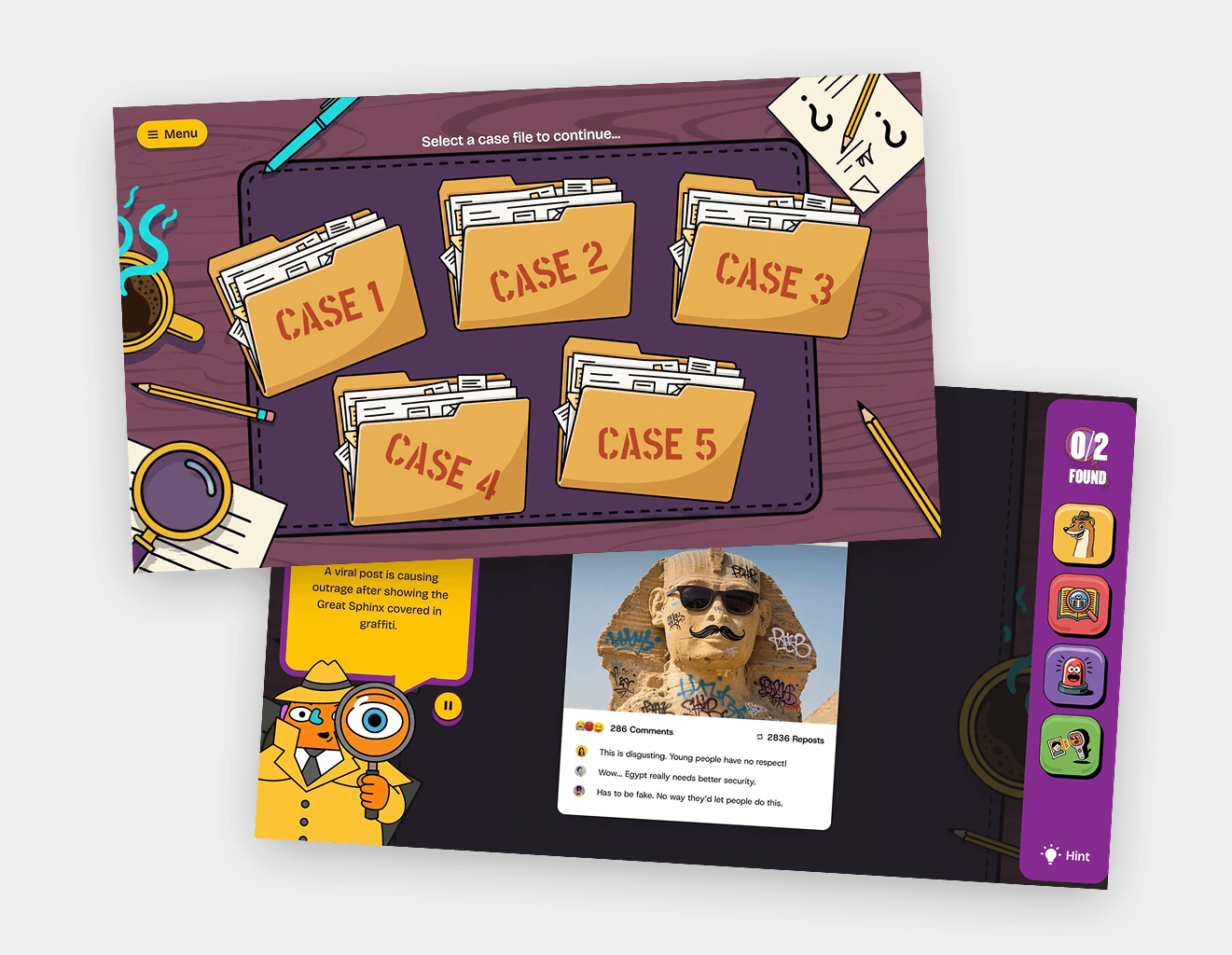
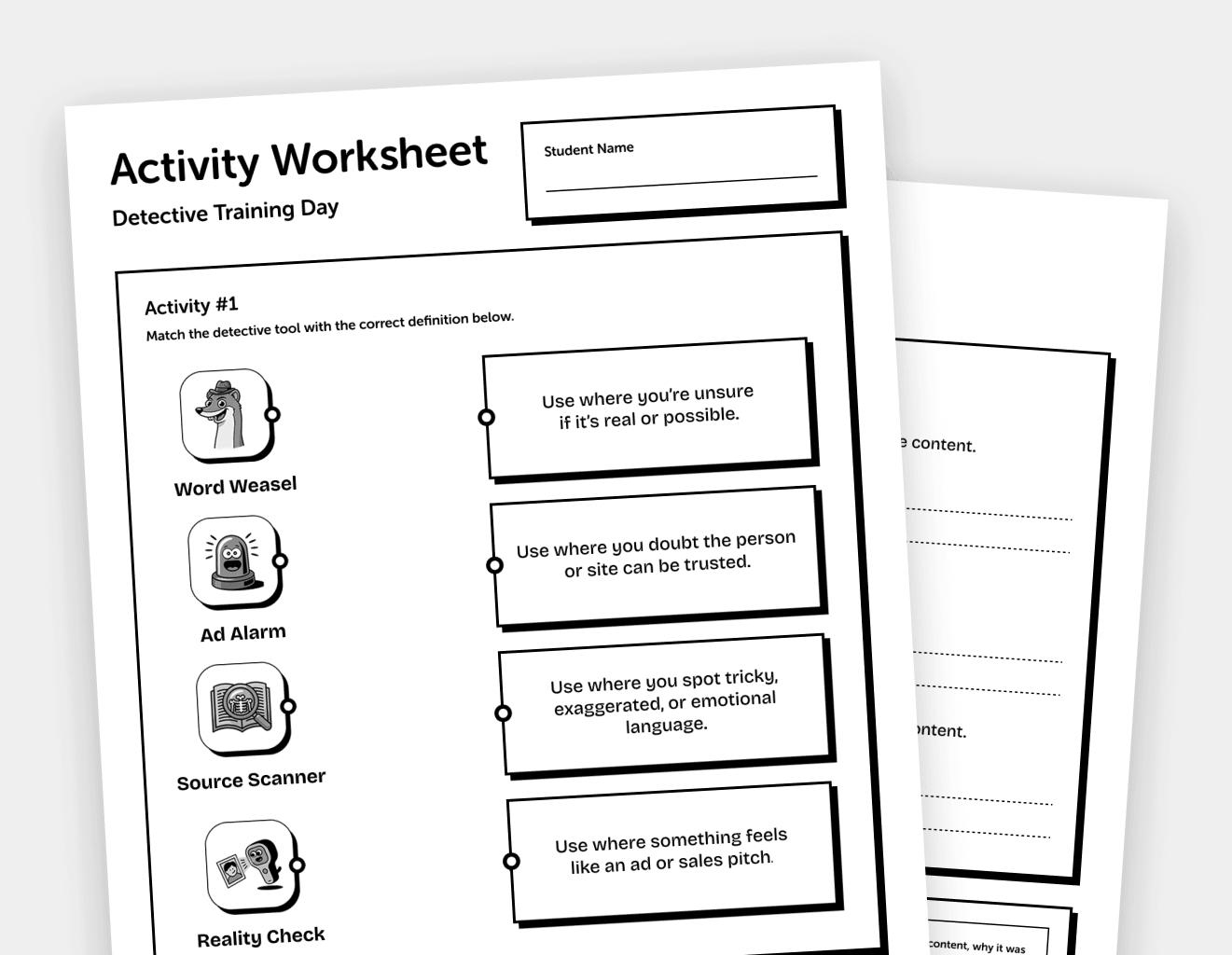
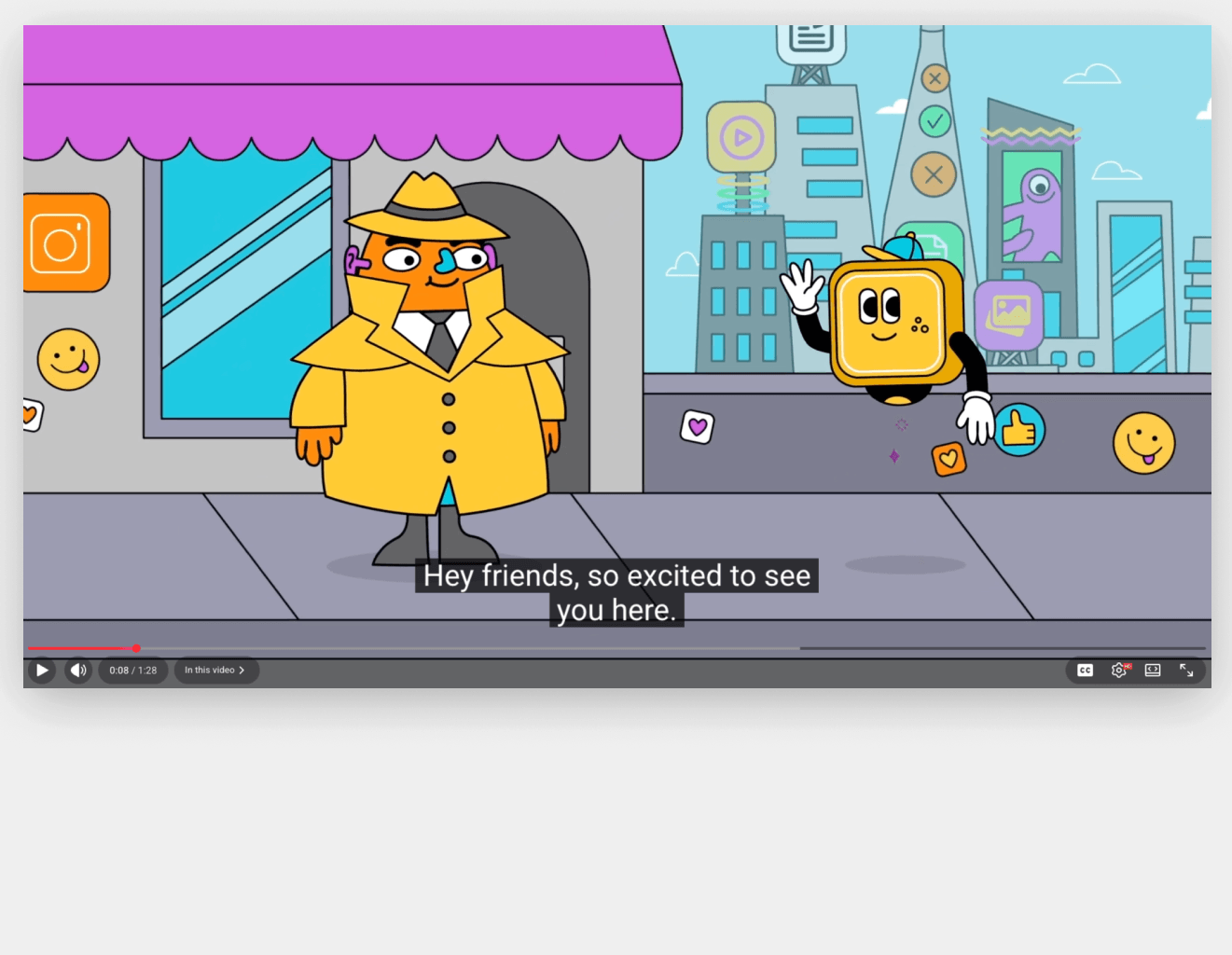
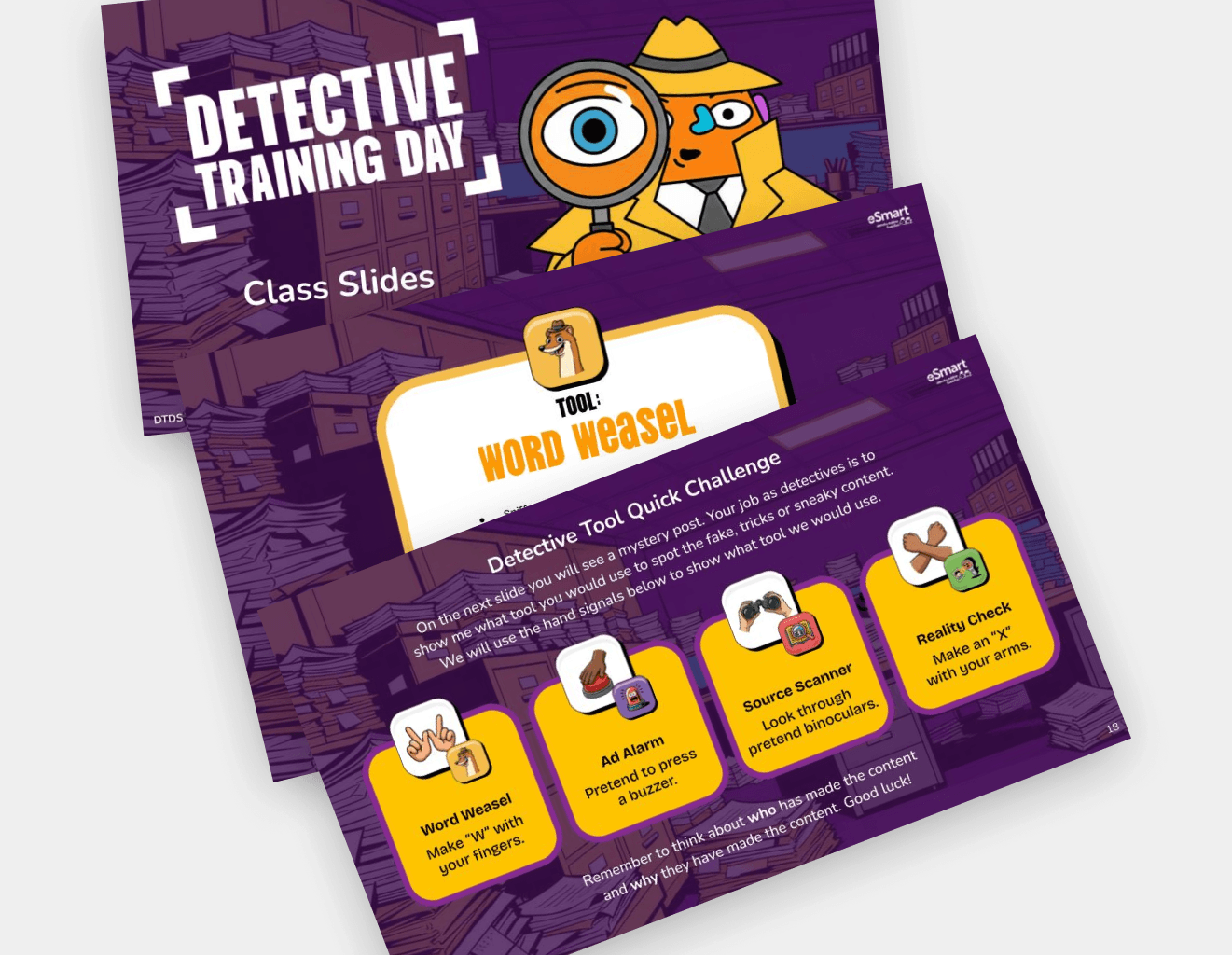
Learners investigate online content using detective tools to spot misleading content and make safe, smart choices online.
Lesson details
Content
About this Risk Area
The material children may come across online, including inappropriate or harmful content.
Example topics:
- Strategies for avoidance and help-seeking in relation to problematic and/or offensive content.
- Recognising and critically analysing misinformation, fake news, and clickbait.
- Understanding the impact of online content on emotions, attitudes, and behaviours.
- Respecting intellectual property rights and understanding copyright laws.
The resources for this risk area provide guidance on navigating and critically evaluating online material.
This lesson builds learners’ media literacy and critical thinking skills by engaging them as digital detectives who examine online content. Learners explore how and why online content is created, and how this influences accuracy, intent, and reliability.
Through gamified learning activities and discussion, learners practise questioning information, identifying persuasive or misleading techniques, and applying detective tools to real world online scenarios. They learn to evaluate digital content before believing or sharing it, supporting safe and responsible online decision making.
The lesson links to the content risk area of the 4Cs of online safety and aligns with Australian Curriculum priorities by supporting digital literacy, ethical understanding, and critical and creative thinking. Learners are empowered to navigate online environments safely, confidently, and responsibly.
Please note: the games are not included in the download pack and require an internet connection to play. Offline and accessible alternatives are available in the download resource pack.
🚀 We’re in Beta!
Welcome to the early-access launch of our eSmart games. We are currently in a Beta Testing phase. This means while the educational content is complete, we are optimising the game performance and learning difficulty for different classroom environments.
A quick note on devices: Detective: Training Day may experience issues on some older iPads (particularly 9th generation models). If you run into any trouble, switching to a different tablet, laptop or desktop should do the trick. It also works really well as an educator-led activity using a single laptop and projector at the front of the class.
Help us refine this resource by sharing your feedback on the learning approach, gameplay or any technical issues if you encounter them.
You can find the survey here.
Learning Intentions
We are learning to check who made online content, why it is made and, how to stay safe from content risk.
Success Criteria
I can identify the author and purpose of a post and explain why it could be misleading.
I can use simple questions to check if content is real, reliable,or trying to sell something.
I can make safe, smart choices about the content I read, watch, and share online.
Curriculum alignment
Australian Curriculum (Version 9.0)
The Australian Curriculum outlines the fundamental knowledge, comprehension, and abilities students are expected to acquire as they advance through the initial 11 years of schooling.
Year 5: English
AC9E5LA01: Understand that language is selected for social contexts and that it helps to signal social roles and relationships.
AC9E5LA02: Understand how to move beyond making bare assertions by taking account of differing ideas or opinions and authoritative sources.
AC9E5LA07: Explain how the sequence of images in print, digital and film texts has an effect on meaning.
AC9E5LY02: Use appropriate interaction skills including paraphrasing and questioning to clarify meaning, make connections to own experience, and present and justify an opinion or idea.
AC9E5LY03: Explain characteristic features used in imaginative, informative and persuasive texts to meet the purpose of the text.
AC9E5LY05: Use comprehension strategies such as visualising, predicting, connecting, summarising, monitoring and questioning to build literal and inferred meaning to evaluate information and ideas.
Year 6: English
AC9E6LA02: Understand the uses of objective and subjective language, and identify bias.
AC9E6LA07: Identify and explain how images, figures, tables, diagrams, maps and graphs contribute to meaning.
AC9E6LY01: Examine texts including media texts that represent ideas and events, and identify how they reflect the context in which they were created.
AC9E6LY02: Use interaction skills and awareness of formality when paraphrasing, questioning, clarifying and interrogating ideas, developing and supporting arguments, and sharing and evaluating information, experiences and opinions.
AC9E6LY03: Analyse how text structures and language features work together to meet the purpose of a text, and engage and influence audiences.
AC9E6LY05: Use comprehension strategies such as visualising, predicting, connecting, summarising, monitoring and questioning to build literal and inferred meaning, and to connect and compare content from a variety of sources.
Years 5 & 6: Health and Physical Education
AC9HP6P04: Describe and demonstrate how respect and empathy can be expressed to positively influence relationships.
AC9HP6P08: Analyse and rehearse protective behaviours and help-seeking strategies that can be used in a range of online and offline situations.
AC9HP6P10: Analyse how behaviours influence the health, safety, relationships and wellbeing of individuals and communities.
Bournemouth University Theory of Change
This project, funded by the Department for Digital, Culture, Media and Sport (DCMS) as part of the UK government's Online Literacy Media Strategy, aims to empower people to stay safe online by being able to critically evaluate what they see and read on the internet. It offers a transferable and sustainable framework and methodology that can not only be used for the independent evaluation of media literacy projects but also to inform their future design.
Awareness: Media literacy enables people to have a critical awareness of how media and information represent people, events, issues and places. On a larger scale, media literacy helps us to understand how the media environment we are engaging with is constructed, for example in terms of how diverse it is, who owns or controls different media sources and how digital and social media is governed, designed and manipulated. Media literacy also involves critical awareness about the role of data and algorithms in everyday life and with regard to citizenship, education, work and health.
My Time, Our Place – Framework for School Age Care in Australia
This framework assists educators to provide children and young people with opportunities to maximise their potential and develop a foundation for successful lifelong learning. The Framework has been designed for use by approved providers and school age care educators working in partnership with children and young people, their families and the community, including schools.
Outcome 2: Children and young people are connected with and contribute to their world.
Children learn about the impact of their actions in online communities and how to engage positively. This is evident when children:
• Recognise the importance of fair and authentic interactions in online games and communities.
• Identify ways to contribute safely and responsibly to shared digital spaces.
National Association of Media Literacy Education (NAMLE)
The NAMLE Framework outlines the foundational concepts and principles for teaching and learning about media literacy. Media literacy, as defined by NAMLE, is the ability to access, analyze, evaluate, create, and act using all forms of communication.
Core Principle 1
• 1.2: Media Literacy Education (MLE) intersects with other literacies, such as information, digital, and social-emotional literacies.
• 1.4: MLE values inquiry of contemporary media experiences that are culturally relevant in both the learning environment and the everyday lives of learners.
Core Principle 2
• 2.1: MLE teaches that all media experiences are constructed and prepares people to engage in critical analysis and reflection of these experiences.
• 2.3: MLE helps learners identify biases within their own and others’ media experiences.
CASEL Framework
This Framework creates a foundation for applying evidence-based, Social and Emotional Learning (SEL) strategies both at school and in the broader community. Its aim is to support the cultivation of SEL skills and environments that advance students’ learning and development.
Responsible decision-making: The abilities to make caring and constructive choices about personal behaviour and social interactions across diverse situations. This includes the capacities to consider ethical standards and safety concerns, and to evaluate the benefits and consequences of various actions for personal, social, and collective well-being. Such as:
- Demonstrating curiosity and open-mindedness.
- Learning how to make a reasoned judgment after analysing information, data, and facts.
Coming soon: adapt this lesson in minutes with AI
Every classroom is different. Our new AI assistant, IRIS, will help you adapt this lesson to your students' needs.

Help your learners earn a FREE eSmart Digital Licence!
Related lesson plans

Contact
About this Risk Area
When potentially harmful contact is initiated by others online, including strangers who may pose risks such as exploitation or identity theft.
Example topics:
- Online privacy and security practices, including setting strong passwords and managing privacy settings.
- Recognising and responding to online threats, such as phishing scams and identity theft.
- Establishing boundaries for online interactions and understanding the risks of sharing personal information online.
- Seeking help and reporting inappropriate or harmful online behaviour to trusted adults or authorities.
The resources for this risk area support learning in relation to safe online communication, privacy settings, and establishing boundaries for interacting with others on the internet.
Explore how apps and games collect personal data. Through gamified scenarios, learners identify privacy risks, how to manage data, and build essential digital literacy skills.

Content
About this Risk Area
The material children may come across online, including inappropriate or harmful content.
Example topics:
- Strategies for avoidance and help-seeking in relation to problematic and/or offensive content.
- Recognising and critically analysing misinformation, fake news, and clickbait.
- Understanding the impact of online content on emotions, attitudes, and behaviours.
- Respecting intellectual property rights and understanding copyright laws.
The resources for this risk area provide guidance on navigating and critically evaluating online material.
Learners investigate online content using detective tools to spot misleading content and make safe, smart choices online.
Compulsion
About this Risk Area
Addresses excessive use of digital devices or online activities which can impact children's mental health, academic performance, and social relationships.
Example topics:
- Understanding the importance of balanced screen time.
- Developing healthy habits for managing digital device use and prioritising offline activities.
- Setting boundaries and practicing self-regulation when it comes to online gaming, social media, and other digital activities.
The resources for this risk area promote healthy relationships with technology and encourage positive social and emotional wellbeing.
Learners explore compulsion-related online safety risks by creating a podcast or fact sheet that encourages balanced digital habits.